PPC for Ecommerce: A Complete Guide to Driving Profitable Online Sales

Written by:
This guide explains how PPC for ecommerce works, how it differs from traditional paid advertising, and how platforms like Google Ads and Meta Ads can be used to drive profitable online sales. It covers key concepts such as campaign structure, ROAS, product feeds, retargeting, and conversion optimisation to help ecommerce brands understand what makes paid advertising successful.

PPC for Ecommerce: A Complete Guide to Driving Profitable Online Sales
Pay-per-click advertising plays a critical role in the growth of modern ecommerce brands. With increasing competition, rising acquisition costs, and ever-changing algorithms, ecommerce businesses need more than just traffic. They need qualified buyers, strong margins, and predictable returns.
This guide explains how PPC for ecommerce works, why it is different from standard paid advertising, and how online retailers can use it effectively to drive sustainable growth.
If you are looking for a practical, no-nonsense breakdown of ecommerce PPC, this article will give you the foundations you need to understand the channel properly before investing.
What Is PPC for Ecommerce?
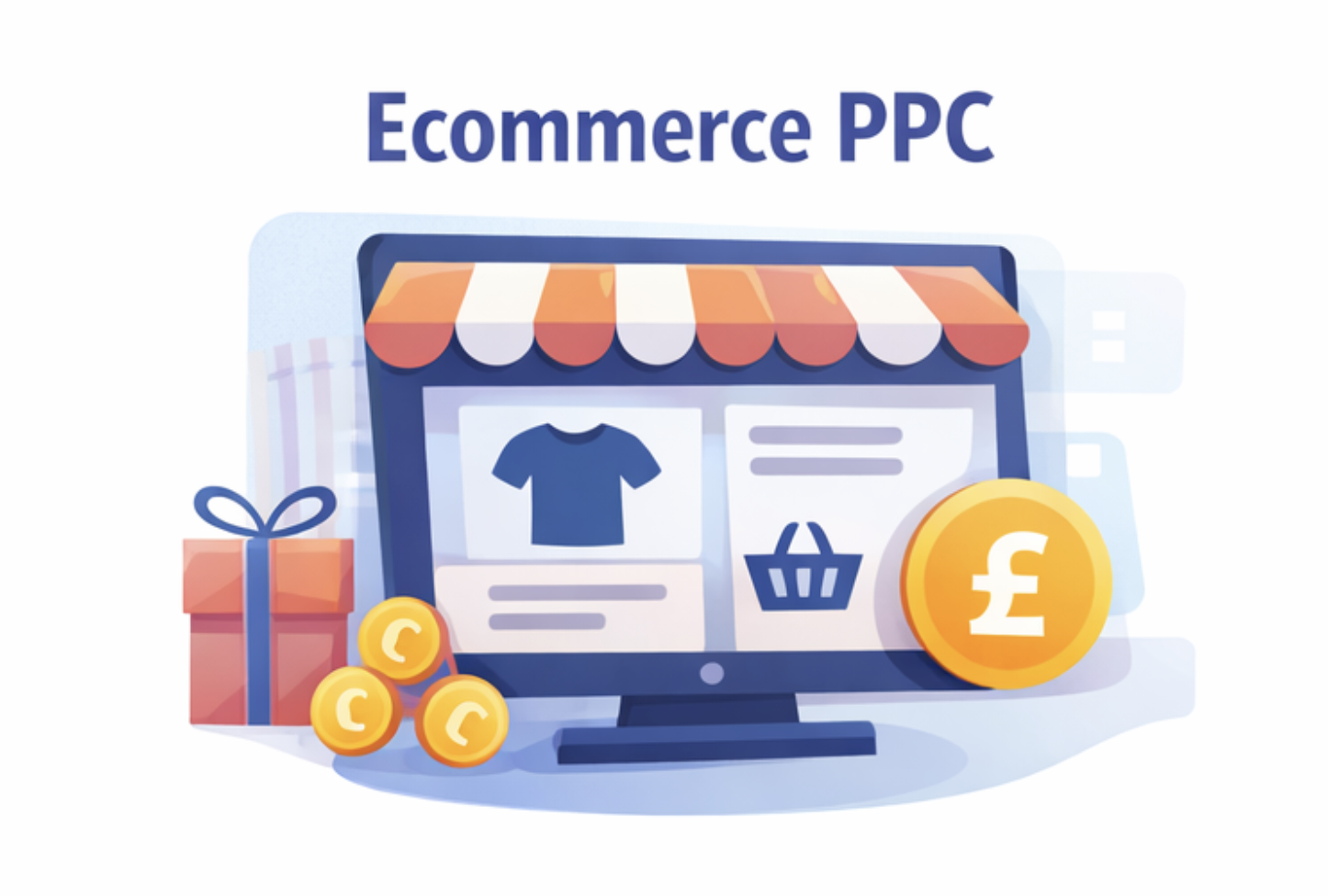
PPC for ecommerce refers to paid advertising campaigns designed specifically to sell products online. Unlike lead generation campaigns, where the goal is to collect enquiries, ecommerce PPC focuses on driving direct transactions.
Advertisers pay when someone clicks an ad, and the success of the campaign is measured by:
- Revenue generated
- Return on ad spend (ROAS)
- Cost per acquisition (CPA)
- Profit margin after ad costs
The most common platforms used for ecommerce PPC include:
- Google Ads
- Google Shopping
- Meta Ads (Facebook and Instagram)
- Microsoft Ads
- Retargeting and remarketing networks
Each platform serves a different purpose in the customer journey, and strong ecommerce PPC strategies combine several channels rather than relying on just one.
How Ecommerce PPC Differs From Traditional PPC
One of the biggest mistakes ecommerce brands make is treating PPC the same way service businesses do.
Ecommerce PPC is fundamentally different because:
You Are Selling Products, Not Conversations
There is no sales call, no follow-up email, and no quote stage. The ad, landing page, product page, pricing, and checkout experience must do all the work.
Margins Matter More Than Clicks
High traffic means nothing if profit disappears. Ecommerce PPC must be structured around product-level profitability, not vanity metrics.
Product Feeds Drive Performance
Shopping ads rely on accurate product data, titles, pricing, availability, and imagery. A weak feed will cap performance regardless of budget.
Conversion Rate Is Just as Important as Ads
If your website does not convert, scaling PPC becomes expensive very quickly. Successful ecommerce PPC is a blend of traffic quality and on-site optimisation.
The Role of Google Ads in Ecommerce PPC
Google Ads remains the backbone of most ecommerce PPC strategies, particularly for brands targeting high-intent buyers.
Search Campaigns
Search ads appear when users actively look for a product. These campaigns work well for:
- Brand searches
- High-intent product keywords
- Category-level searches
They are typically lower volume but higher intent.
Google Shopping Campaigns
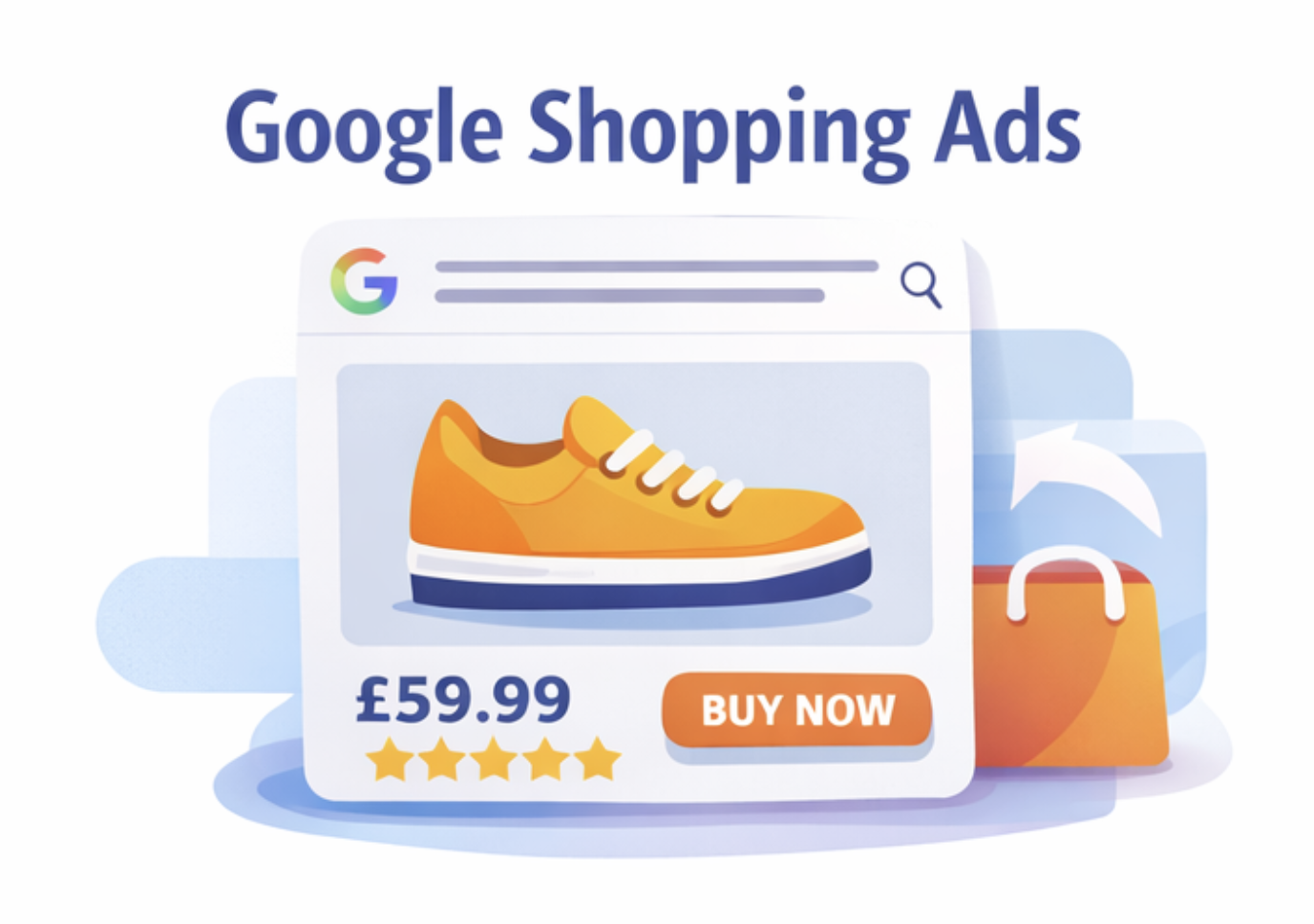
Shopping ads show product images, prices, and brand names directly in search results. These ads dominate ecommerce PPC because:
- They capture high commercial intent
- Users can compare prices instantly
- Clicks are often more qualified
Performance here depends heavily on:
- Product titles and descriptions
- Accurate categorisation
- Competitive pricing
- Feed quality
Performance Max for Ecommerce
Performance Max campaigns allow advertisers to run ads across Search, Shopping, Display, YouTube, and Discover from a single campaign. When structured correctly, they can scale revenue efficiently. When set up poorly, they can waste budget quickly.
Understanding how to segment products, control signals, and exclude low-value traffic is essential.
Meta Ads and Social PPC for Ecommerce
Meta Ads play a different role in ecommerce PPC. Rather than capturing existing demand, they are designed to create demand.
Prospecting Campaigns
These target new audiences based on interests, behaviours, or lookalike data. They are effective for:
- Introducing products
- Launching new ranges
- Scaling brands with strong creative
Retargeting Campaigns
Retargeting ads show to users who have:
- Viewed products
- Added items to basket
- Started checkout but did not purchase
These campaigns usually deliver the highest ROAS and are essential for recovering lost revenue.
Strong creative, clear messaging, and frequent testing are key to long-term performance on Meta platforms.

Structuring Ecommerce PPC Campaigns Properly
Campaign structure is one of the biggest factors separating profitable ecommerce PPC from wasted spend.
A well-structured account typically includes:
- Separate campaigns by product category or margin
- Clear distinction between brand and non-brand traffic
- Dedicated retargeting campaigns
- Budget allocation based on performance, not guesswork
Grouping everything together makes it impossible to scale profitably.
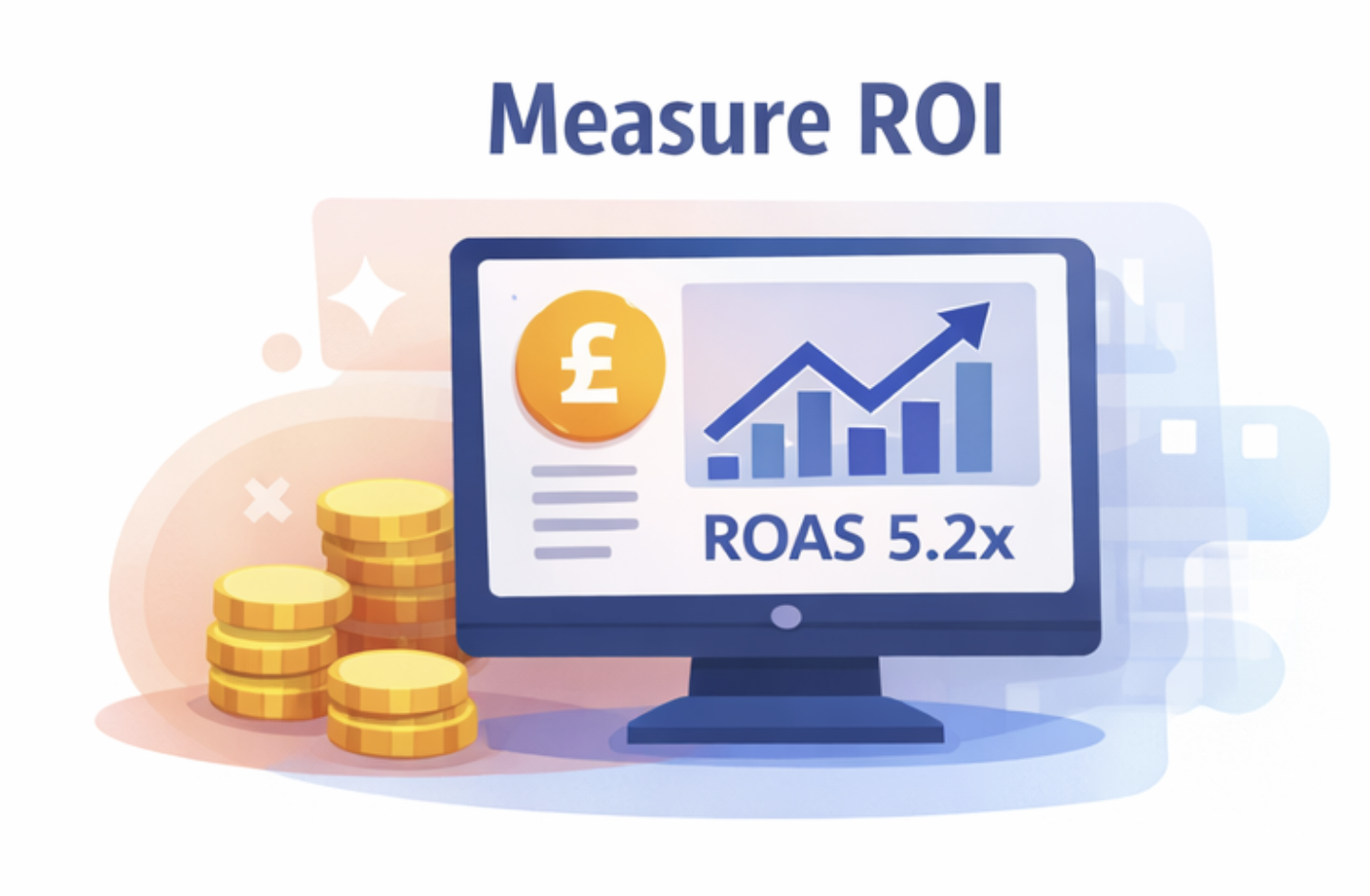
Understanding ROAS, CPA, and Profit
Many ecommerce businesses focus on ROAS alone. While ROAS is important, it should never be viewed in isolation.
Key considerations include:
- Product margins after cost of goods
- Shipping and fulfilment costs
- Refunds and returns
- Platform fees
- VAT and tax obligations
A campaign with a lower ROAS can sometimes be more profitable than a high ROAS campaign selling low-margin products.
Ecommerce PPC should always be tied back to real profit, not just dashboard metrics.
Common Ecommerce PPC Mistakes
Even experienced advertisers make mistakes with ecommerce PPC. Some of the most common include:
Sending Traffic to Weak Product Pages
If product pages lack strong imagery, clear benefits, trust signals, or reviews, conversion rates suffer.
Ignoring Feed Optimisation
Poor titles, missing attributes, or incorrect categorisation limit visibility and relevance.
Scaling Too Quickly
Increasing budgets before data stabilises often leads to performance drops and wasted spend.
Treating Ads as a Set-and-Forget Channel
Ecommerce PPC requires continuous optimisation, testing, and refinement.
The Importance of Conversion Rate Optimisation
Ecommerce PPC and conversion rate optimisation go hand in hand.
Improving conversion rate allows you to:
- Lower cost per acquisition
- Scale ads more aggressively
- Increase overall profitability
Simple improvements such as faster load times, clearer CTAs, better imagery, and stronger product descriptions can dramatically improve results without increasing ad spend.
How Ecommerce PPC Fits Into a Wider Growth Strategy
PPC should not operate in isolation. The strongest ecommerce brands combine paid advertising with:
- SEO for long-term traffic growth
- Email marketing for retention
- SMS for repeat purchases
- Content marketing for brand authority
When these channels support each other, acquisition costs fall and lifetime value increases.
When to Invest in PPC for Ecommerce
Ecommerce PPC works best when:
- You have clear product-market fit
- Your website converts reliably
- Margins allow for paid acquisition
- You have tracking set up correctly
Launching PPC too early often leads to frustration. Launching it at the right time creates predictable, scalable revenue.
Learning More About PPC for Ecommerce
This article is designed to give you a clear understanding of how PPC for ecommerce works and what goes into running profitable campaigns.
If you want to explore the service side in more detail, including how ecommerce PPC campaigns are built, managed, and optimised for growth, you can read more on our dedicated PPC for ecommerce page here:
👉 https://www.fruityllama.co.uk/ppc-for-ecommerce
Final Thoughts
PPC for ecommerce is one of the fastest ways to drive sales, but only when it is approached strategically. Success comes from understanding buyer intent, structuring campaigns properly, managing margins, and constantly optimising both ads and on-site experience.
For ecommerce brands serious about growth, PPC is not just an advertising channel. It is a performance engine that, when managed correctly, can fuel long-term success.